With just 140 characters to get your message across, you’d better make them count. This top ten list is my take on the mistakes I see far too often on Twitter and how to avoid them.
1. Hard selling

If every other tweet is sell, sell, sell or blatant self-promotion you’re on the fast track to alienating your audience and getting unfollowed. Nobody wants their feed filled with repetitive hard selling Tweets. Think of social media as a signpost to your brand, raising awareness of you and your products or services. It is not an extension of your company website; it is not a free advert for your new product.
The clue is in the name – social media needs to be social. That means engaging with your audience, giving them information, posting relevant news, commenting on developments in your industry, even just saying hi, acknowledging a customer’s comments or asking questions. If even half of your tweets are promotional, that’s too much.
2. Auto DMs
 We’ve all done it – innocently followed someone only to receive a generic direct message a few minutes later. Ask yourself why you’re doing it? If you’re saying thanks for the follow then please don’t! If you’re explaining what you do, what you sell or who you are in a DM then you’re not using your profile properly.
Social media, and Twitter in particular, is about the personal touch – which is the antithesis of an auto DM. Part of the point with Twitter is being visible, so why say something to a customer that you wouldn’t want anyone else to see? Yes a DM can be useful for handling personal details or complaints but auto DMs are just irritating.
3. Linking to Facebook
 I have nothing against Facebook (although some Twitter users do) but if I wanted to be on Facebook then I’d have gone on Facebook. For a start linking to Facebook content is lazy. Yes content management systems make it very tempting to do one size fits all posts, but they’re actually doing you a disservice.
At the end of the day, Twitter and Facebook are very different animals so don’t treat them the same. Cater your messages specifically to each medium. Yes it takes a little more time, but it makes the content for both much more relevant and that will help get you better engagement.
If Twitter is a signpost to your brand – well then so is Facebook. These platforms are there to educate people about your brand, make them aware of you and make users more likely to become customers. You don’t sell on Twitter, you don’t sell on Facebook so if you need to link anywhere, make it your company website!
4. Being unavailable

Some companies can get by operating a strictly nine to five Twitter presence and that’s fine. Other businesses can’t. Do you operate across time zones? Are you a 24 hour business? Do you have a major online presence? If the answer to any of these questions is yes then your customers expect you to be monitoring Twitter outside normal business hours. And when a customer in need Tweets they expect a reply.
If you absolutely can’t cater to a broader range of cover, then state in your profile the times that the feed is monitored so that customers know when they can expect a reply. Complaints and negative word of mouth is a major issue for any brand on Twitter and that leads us to point number 5.
5. Ignoring complaints
 Ignore complaints at your peril. Social networks are like digital word of mouth. If you ignore someone with a complaint they’ll shout it on their feed and their network will see it.
View complaints as a second chance to get things right, don’t see them as a threat. If you turn a complaint around on Twitter then others will see and may even be impressed. The complainant will probably tweet about it too.
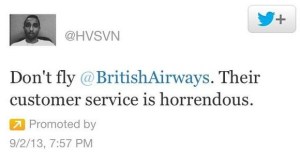
Get it wrong and you could face complaintvertising, where someone buys a promoted tweet to highlight their gripe with your company. These definitely will be noticed, shared and some have even received press coverage.
 Calum Campbell